

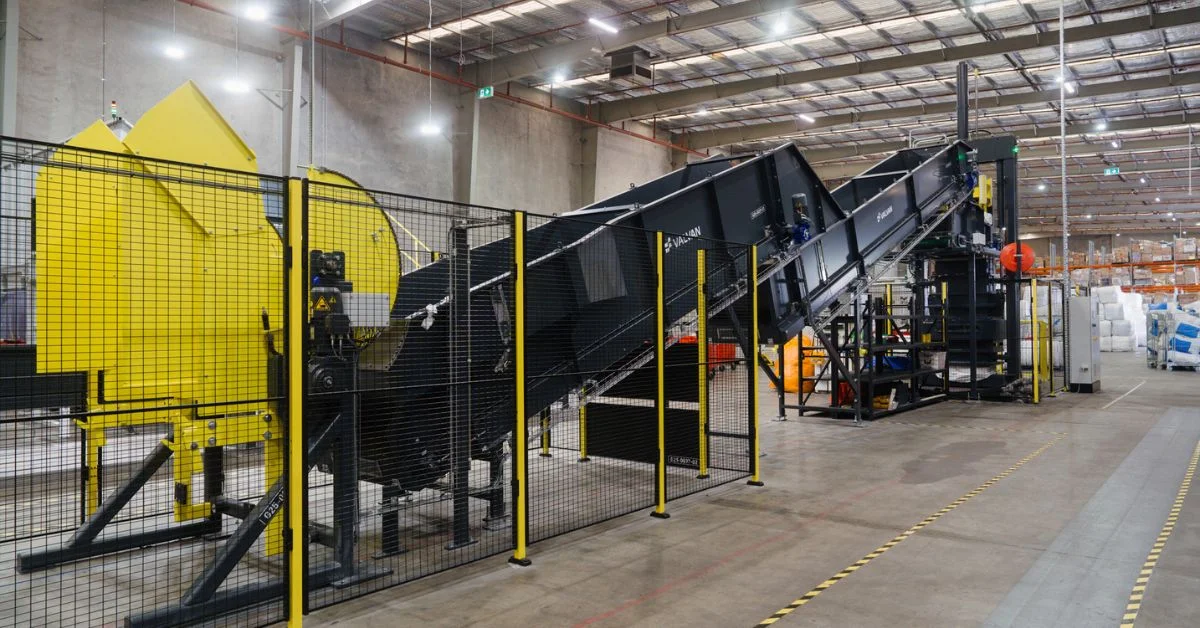
Salvos Stores has opened Australia’s first automated Textile Recovery Facility at Carole Park, on the boundary of Forest Lake and Brisbane’s south-western industrial corridor, with the site set to process up to 5,000 tonnes of textiles per year and keep millions of items out of landfill.
The facility, which received $4.97 million in Queensland funding, delivers on a plan that was announced under the Project Boomerang initiative and supported by feasibility research from QUT. It is the first of its kind in Australia and draws on the model of an automated textile sorting and decontamination plant already operating in Amsterdam, replicating that technology in a Queensland context for the first time.
The opening marks a significant moment for The Salvation Army’s commercial arm, which has operated Salvos Stores across Australia for more than 140 years. The organisation kept 52 million items in circulation through its network of over 400 stores last year alone, and the Carole Park facility extends that work into a new tier, capturing textiles that cannot be resold in stores and redirecting them into recycling supply chains rather than landfill.
How the Facility Works
The Carole Park facility uses automated sorting and decommissioning technology to process donated textiles that fall below resale quality. The system sorts garments by fibre type, removes buttons and zippers, and prepares materials as feedstock for recycling and manufacturing processes. The result is a cleaner, more commercially viable supply of recycled textile material than manual sorting alone can produce.
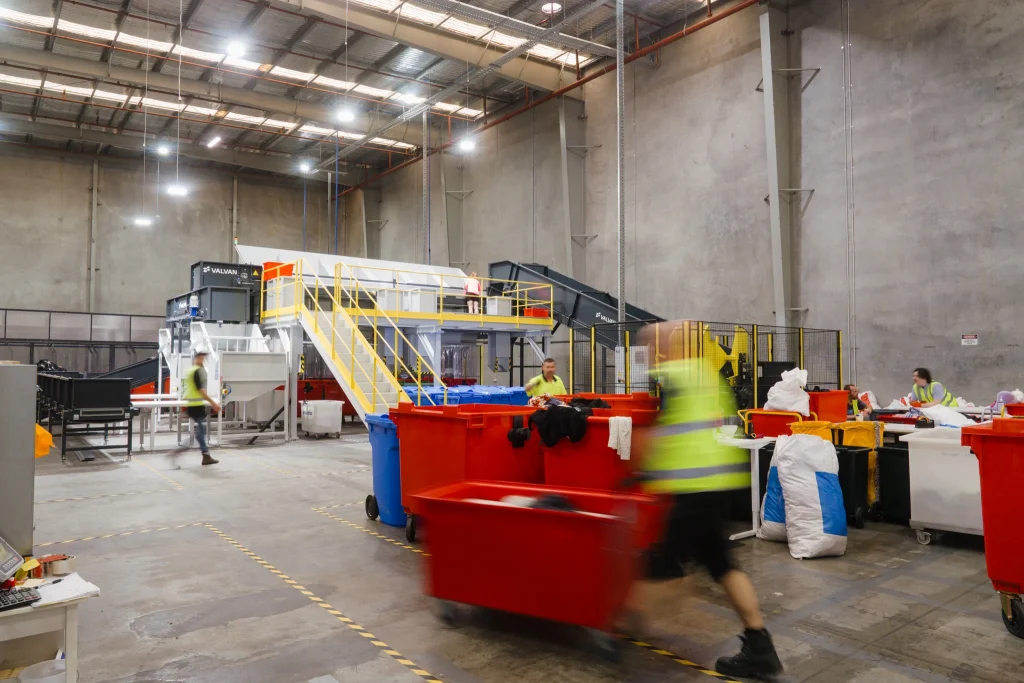
The facility draws its supply from donations flowing through the broader Salvos Stores network and is designed to pilot and scale textile recovery solutions across Brisbane before expanding its reach. At full capacity, the site will handle up to 5,000 tonnes of textiles annually, generating additional revenue that feeds back into The Salvation Army’s frontline service programmes across the country.
The project has attracted support from a number of significant corporate partners looking to develop local supply chains and markets for recycled textile materials, including Kmart Group, Samsara Eco and Full Circle Fibres. Charitable Recycling Australia has also been involved in the collaborative structure underpinning the initiative. QUT’s feasibility research helped establish the technical and commercial case for the facility before the investment decision was made.
The Scale of Australia’s Textile Waste Problem
The Carole Park facility arrives at a moment when the scale of Australia’s textile waste challenge is becoming harder to ignore. More than 200,000 tonnes of clothing ends up in landfill in Australia each year, a figure that reflects both the volume of fast fashion entering the market and the limited infrastructure available to process garments at end of life. Most donated clothing that cannot be resold has historically had few options beyond landfill or export to lower-income markets, neither of which constitutes a sustainable long-term solution.
The circular economy model that underpins the Carole Park facility offers a different pathway. Rather than treating unsaleable textiles as waste, the facility treats them as raw material. Fibres recovered through the sorting and decommissioning process can re-enter manufacturing supply chains, reducing demand for virgin materials and closing the loop between consumption and production. The Amsterdam facility on which the Carole Park plant is modelled has demonstrated that this approach is commercially viable at scale, and the Queensland site is designed to replicate and build on that proof of concept.
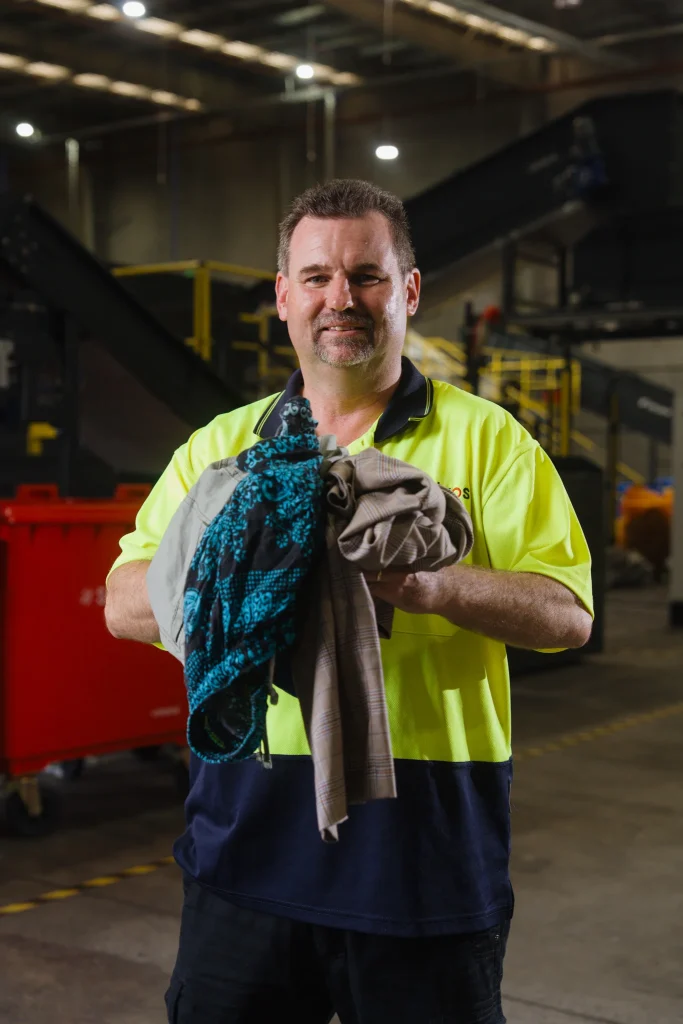
Head of Salvos Stores Nic Baldwin described the opening as a proud moment reflecting the organisation’s commitment to practical environmental action alongside its longstanding social mission. Business Development Manager Meriel Chamberlin connected the facility to the broader Salvos Stores story, noting that the organisation has spent over 140 years turning second-hand goods into hope through its stores and that the recovery facility represents a new expression of that same purpose.
Why This Matters to the Forest Lake and Carole Park Community
For residents of Forest Lake, Carole Park and the surrounding south-western suburbs, the arrival of a nationally significant piece of circular economy infrastructure in their backyard is worth understanding. The facility creates ongoing employment in the local industrial corridor and positions the area as a hub for the kind of sustainable waste management work that is increasingly central to Queensland’s economic future.
More broadly, the facility gives local residents a clearer sense of where their Salvos Store donations go. When a bag of clothes is dropped at a donation point, the garments that cannot be resold now have a destination that keeps them productively in circulation rather than sending them to landfill. That outcome benefits the environment, supports The Salvation Army’s programmes and strengthens the case for donating rather than discarding.
For households across the south-western suburbs who want to reduce their contribution to textile waste, the simplest action remains donating usable and unusable clothing through Salvos Stores rather than placing it in general waste. More information about the Textile Recovery Facility is available at here.
Published 17-March-2026.