

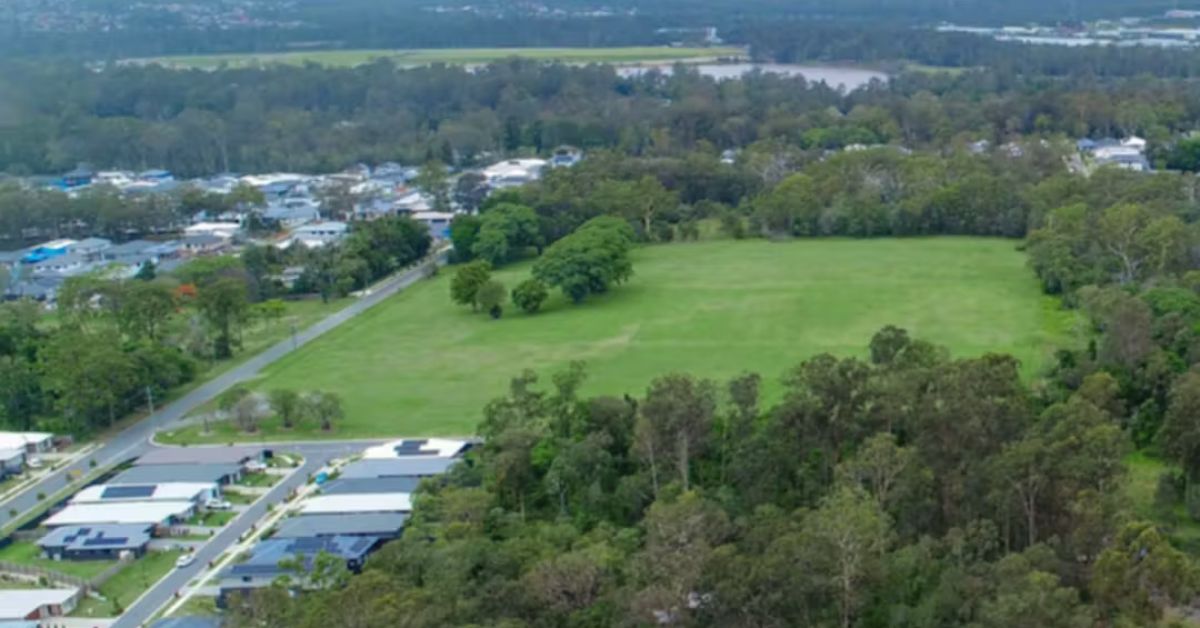
Early works on the Pallara District Sports Park at 65 Van Dieren Road are set to get underway from late March 2026, with main construction now scheduled to begin in late 2026, subject to weather conditions and approvals.
The February 2026 concept plan update confirms a revised timeline for the project, following the release of the final concept plan in November 2025. At that time, planners expected construction to begin in early 2026. The updated schedule sets out a two-stage delivery approach, with preparatory civil works on Van Dieren Road starting first before main construction of the park begins later in the year. Pallara and Forest Lake families who have followed the project since community engagement began in October 2023 continue to wait, although works are now set to commence on site.
What Early Works Involve
From late March 2026, early works will include building new kerb and channel and footpath on Van Dieren Road, planting new street trees, and installing a new stormwater outlet pipe in J.M. Sullivan Park. These civil works prepare the site’s surrounds and drainage infrastructure ahead of the larger construction effort later in the year. Residents near Van Dieren Road can expect some temporary changes in the area during this period, with a further update promised before works begin.
The early works phase reflects the complexity of delivering a district-level sporting facility from the ground up in a rapidly developing suburb. Eight properties along Van Dieren Road have already been purchased for the sports park and bushland conservation, a process that has been underway for several years as the site was assembled from multiple private landholdings. That land acquisition groundwork now gives the project a clear path to construction.
What the Park Will Include
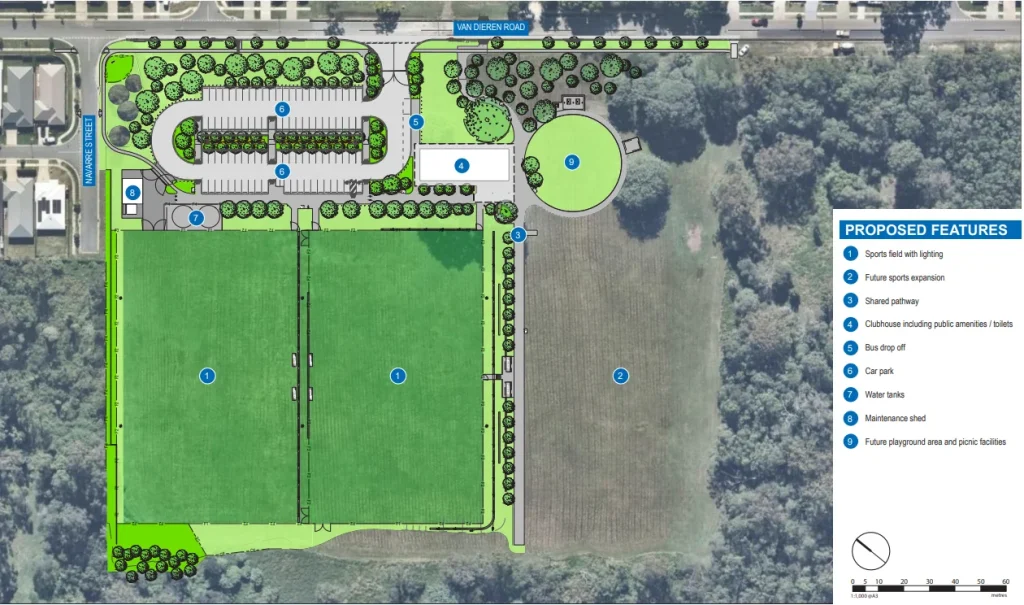
The final concept plan, released in late 2025 and updated in February 2026, sets out a district-level sports and recreation facility designed to serve Pallara, Forest Lake and the broader southwest Brisbane community. The park will deliver two outdoor sports fields, a clubhouse with public amenities creating a central hub for players, families and visitors, on-site parking and a dedicated bus drop-off, sports lighting and irrigation to support evening use and quality playing surfaces, and a future playground area and picnic facilities site.
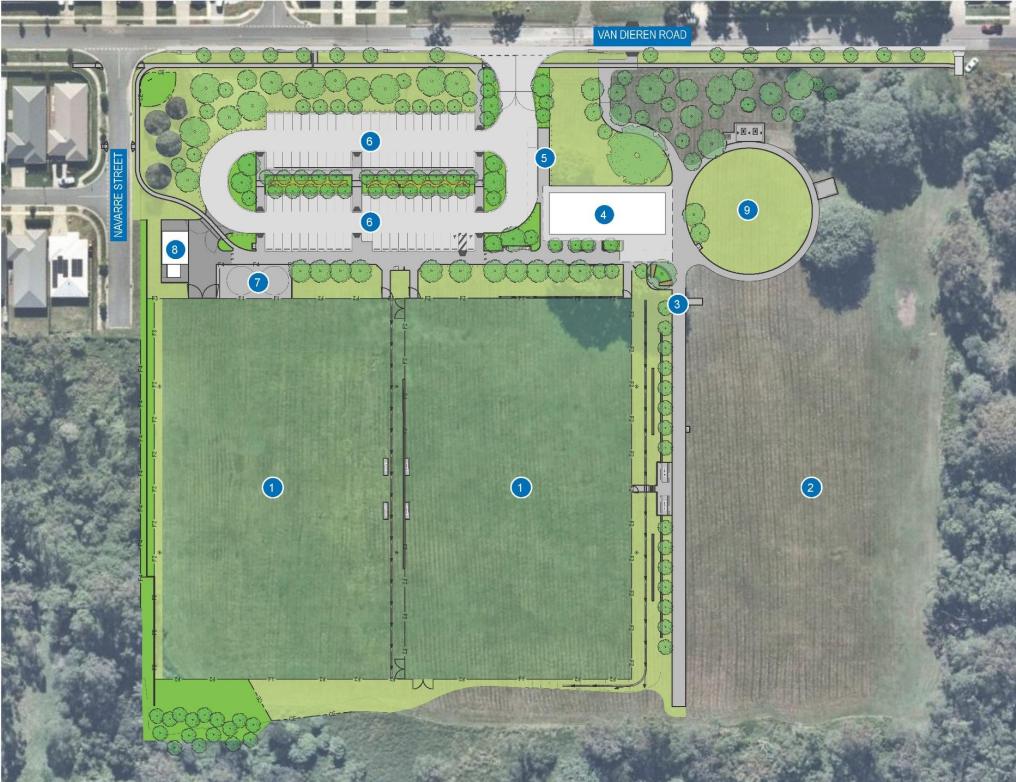
The concept plan also incorporates shared pathways, spectator areas, team shelters and water tanks for irrigation. The design responds directly to what Pallara residents told planners during the 2023 and 2024 community engagement rounds, with safe and clean facilities, good amenities, strong access and sufficient parking all identified as community priorities. Local clubs will be identified through future tender processes once construction is closer to completion.
Why This Matters to Pallara and Forest Lake
Pallara’s growth over the past decade has been extraordinary. According to the 2021 census, Pallara had 3,861 residents, a significant increase from the 511 recorded in 2016, and residential development has continued at pace since then, with multiple house and land estates delivered along Van Dieren Road itself. That growth has placed real pressure on the suburb’s recreational infrastructure, with families currently relying on parks and sporting facilities in neighbouring Forest Lake, Durack and Calamvale to meet their needs.
The Pallara District Sports Park directly addresses that gap. For local sporting clubs, the arrival of a district-level home ground with two lit playing fields, a clubhouse and proper amenities opens the door to formalising and growing their presence in the southwest Brisbane corridor. For families, it means a quality community space within the suburb rather than a drive across the city. And for Pallara as a whole, a well-designed district park anchors the suburb’s social infrastructure in a way that purely residential development cannot.
The Pallara District Sports Park also forms part of the broader Pallara Open Space Network Corridor, with further stages subject to future funding and planning processes as the suburb continues to grow.
Project Timeline and Contact
The current project schedule runs from early works in late March 2026 through to main construction commencing in late 2026, with the overall project timeframe extending through to 2028. Residents can expect further updates from the project team before each works phase begins.
For enquiries about the Pallara District Sports Park, the project team can be reached on 07 3178 5413 during business hours or on 07 3403 8888 at any time. Email enquiries can be sent to cityprojects@brisbane.qld.gov.au. Further information is available here.
Published 27-March-2026.