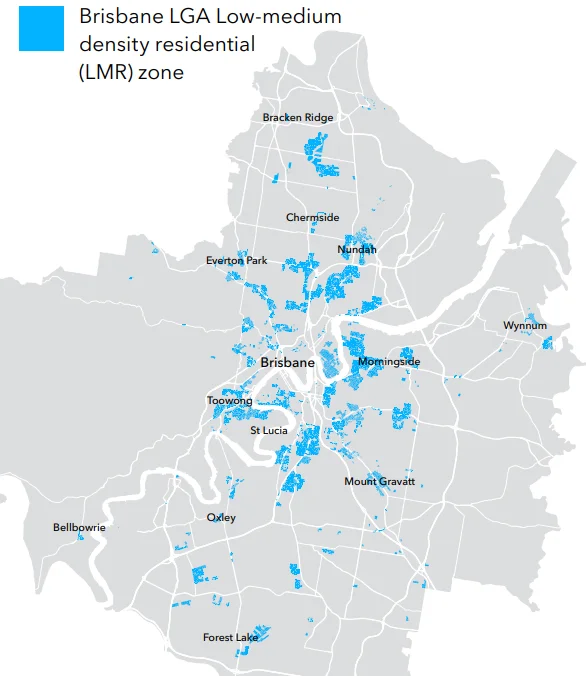
To stop urban sprawl from destroying Brisbane’s green spaces, planners are proposing to pack more housing into the existing footprints of Algester, Pallara, and Heathwood.
The proposed changes are currently open for community feedback until Friday, 20 March 2026. This review of low-medium density residential zones is a response to a massive housing shortage, with the city needing roughly 210,800 new homes over the next two decades. Local leaders want to hear if residents support these shifts or have concerns about how the updates might change the feel of their specific neighbourhoods.
Planners are looking to increase building heights from the current two-storey limit to three storeys in many residential pockets. In certain spots, particularly those within walking distance of major shopping centres or high-frequency bus and train lines, buildings could even reach four storeys.
This strategy aims to place more people near the services they use daily, potentially reducing the time residents spend sitting in traffic during their morning commutes.
Smaller Lots for Smaller Households
Along with taller buildings, the Council is suggesting a major change to how land is divided. Minimum lot sizes could drop from 260 square metres to just 120 square metres for properties located within 400 metres of public transport. This shift reflects a changing Brisbane where more than half of all households are now made up of single people or couples without children.
Currently, the city lacks enough one- and two-bedroom options to house these smaller groups, leading to a mismatch between the types of houses available and what people actually need.
These local changes are part of a much larger plan called the Sustainable Growth Strategy. Brisbane is attracting thousands of new residents from interstate and overseas every year, putting pressure on the rental market and house prices.
By allowing for more diverse housing types like townhouses and small-lot homes, the Council hopes to provide more affordable options for young buyers and older residents looking to downsize. This approach is intended to protect the city’s outer green spaces by focusing development in areas that already have the roads and pipes to handle more people.
The strategy also considers how the city handles major challenges like floods or future health crises. By creating well-designed, compact communities, the goal is to keep Brisbane a functional and vibrant place to live even as the population spikes. Residents are encouraged to view the highlighted maps of the affected precincts to see exactly where these height and size changes might occur before the consultation period ends later this month.
Forest Lake is one of 18 Brisbane suburbs where planning rules for low-medium density residential zones may change under the More Homes, Sooner initiative, but local residents are making clear that their support for new housing hinges on whether schools, roads and public transport can keep pace with any growth the changes deliver.
The proposed changes to the LMR zone affect pockets of Forest Lake close to public transport stops and the Forest Lake Shopping Centre on Forest Lake Boulevard. Community consultation is open until Friday 20 March 2026. Forest Lake residents have delivered a pointed and practical response, cutting through abstract planning language to ask a question local families face every day: what comes first, the homes or the infrastructure to support them?
A Suburb Already Under Pressure
Developers master-planned Forest Lake from the ground up in 1991 as Brisbane’s first purpose-designed community, creating 7,700 house lots, 120 hectares of parks and the 10.9-hectare recreational lake that defines the suburb’s identity. That deliberate design gave Forest Lake its community character, but it also created fixed infrastructure and a fixed school catchment that is now under genuine strain.
Forest Lake State High School introduced an Enrolment Management Plan in August 2025, meaning the school is operating at or near capacity and is now restricting out-of-catchment enrolments. Families already living in Forest Lake say the suburb’s secondary schooling infrastructure cannot currently absorb significant additional enrolments. Community members have raised this directly in response to the More Homes, Sooner proposals, with the concern that more dwellings means more families, and more families means more pressure on schools that are already full.
The transport picture adds to that concern. Forest Lake has no train station within its boundaries. The suburb’s main public transport connections to the city are the Route 100 CityXpress from Forest Lake Shops to the city, and the Routes 460 and 461 via the Centenary Highway and Western Freeway. For the More Homes, Sooner framework to designate areas near bus stops as Key Locations eligible for four-storey development, the frequency and reliability of those services matters enormously to residents who would rely on them.
What Is Being Proposed
The changes focus on Low Medium Density Residential LMR zones, typically located near transport corridors and shopping centres rather than across entire suburbs. The proposal would lift the base building height to three storeys across all LMR land. Properties within 400 metres walking distance of a shopping centre or a bus stop with services at least every 20 minutes during the day would qualify as Key Locations and could rise to four storeys on lots of 800 square metres or more.
Photo Credit: BCC
In Forest Lake, only areas close to high-frequency routes would meet that threshold, while streets served by lower-frequency services would remain subject to the three-storey limit.
Minimum lot sizes would reduce to 120 square metres in some circumstances, enabling small freehold houses and terrace-style homes on compact blocks in well-serviced locations. The proposal would adjust on-site car parking requirements, reducing the requirement for two-bedroom units from two spaces to 1.5 spaces citywide and to 1.2 spaces in Key Locations, reflecting declining car ownership and the significant cost car spaces add to new homes.
Design safeguards are part of the framework, including minimum setbacks from freestanding houses, maximum building footprints and requirements for street tree planting.
Affordability: The Real Question
Beyond the infrastructure debate, Forest Lake residents have raised a point that goes to the heart of why the housing crisis persists regardless of what planning rules say. More dwellings do not automatically mean affordable dwellings. Builders and developers face rising costs for labour, materials and financing, along with the tax embedded in every new build, which pushes the price of new townhouses and compact apartments in established suburban Brisbane beyond the reach of many buyers on typical incomes.
Community members have noted that easing planning controls is only one part of the equation, and that without addressing the underlying cost of construction and the viability gap that affects smaller infill projects, the number of homes actually built as a result of these changes may be far fewer than the headline figures suggest. That concern has some grounding in recent history: new dwelling approvals across Brisbane’s LMR zones fell from around 1,100 homes per year to just 445 in 2023, not because the planning rules prevented development, but because the economics of building did not stack up.
Planning-aware residents view the initiative’s adjustment of car parking requirements as one of the more practical levers, noting that a single basement car space can add up to $82,000 to the cost of a unit. Whether that alone is enough to shift the economics meaningfully is a genuine question the community is raising through this consultation.
How to Have Your Say
Consultation on the More Homes, Sooner draft amendments is open until Friday 20 March 2026. Residents can share feedback online at brisbane.qld.gov.au by searching “More Homes, Sooner”, by emailing strategicplanninghousing@brisbane.qld.gov.au, or by calling 07 3403 8888. Written submissions can be posted to Strategic Planning (More Homes Sooner), Brisbane City Council, GPO Box 1434, Brisbane QLD 4001.
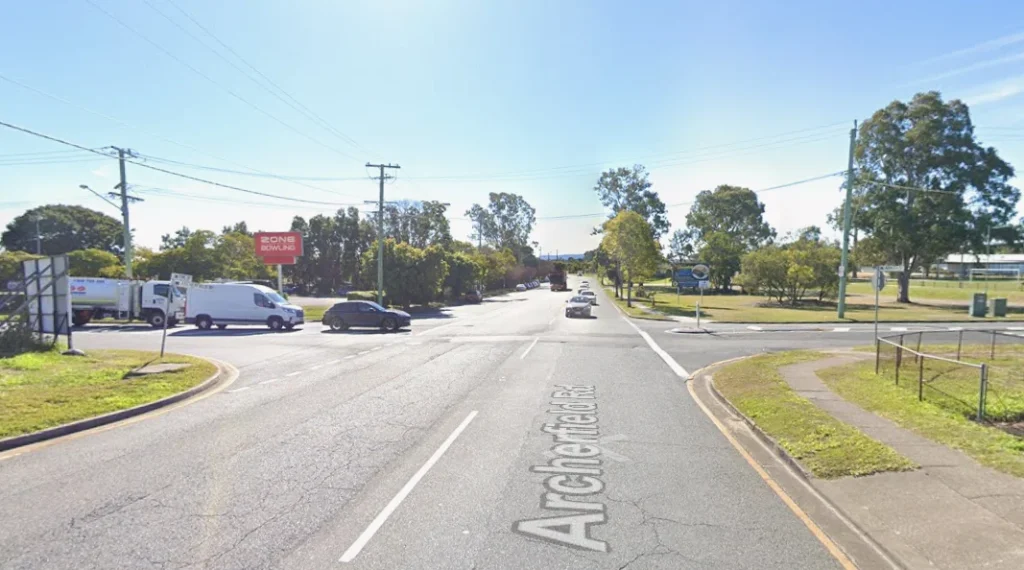
Safety upgrades are in the concept and information gathering stage for the Archerfield Road, Azalea Street and Pine Road intersection in Inala. Around 22,000 vehicles travel through the intersection daily and residents have long raised concerns about safety and difficult traffic flow at the site.
The new upgrade plan aims to address those issues with safer controls and clearer movement through the area. Brisbane City Council began planning after traffic data and community input showed how often the intersection affects daily travel in Inala and nearby Richlands.
Council held information sessions at Inala Plaza and Richlands Plaza in late October to share early design details and gather feedback. Council said responses from these sessions will inform the next stage of design. Construction is listed for 2027 as planning and investigations continue.
Safety And Traffic Concerns
Media reports cite seven serious crashes at the intersection between 2021 and 2023. Those reports noted the site as one of Brisbane’s more high-risk intersections during that period. Community members have described frequent near misses and regular delays.
Photo Credit: Google Maps
Local representatives said residents in Inala have raised these issues for some time, pointing to ongoing concerns about how the intersection operates during busy hours. The upgrade responds to these issues by adding signal control and improving layout.
What The Upgrade Includes
Council outlined a design that adds traffic lights, dedicated turning lanes and a pedestrian crossing. These features aim to improve safety for people walking or driving through the intersection.
The plan focuses on smoother movement between Inala and Richlands and safer pedestrian access across Archerfield Road. Council documents state the goal is to improve the intersection’s safety and daily operation for all road users.
Community Effort Drives Action
Community involvement influenced the planning process. Residents in Inala have consistently raised concerns about the risks and delays at this location. Council leaders said local feedback is important and will continue to guide the design as it develops.
Local representatives stated that community knowledge helped highlight the problems and supported the need for change. The upgrade aligns with Council’s broader safety and traffic improvement program across Brisbane, including the Inala area.