
Electric Vehicle Numbers Surge in Calamvale

The southern suburbs of Calamvale and Forest Lake sit in a part of Brisbane where car ownership is almost universal and public transport alternatives are limited. This heavy reliance on driving makes Calamvale’s position among Brisbane’s highest total EV counts all the more striking.


The suburb registers significantly more electric vehicles than its income profile alone would suggest, placing it alongside Sunnybank Hills, West End, and Carindale as an area where EV adoption has outpaced the predictions built around wealth and socioeconomic status.

A suburb that doesn’t fit the usual EV profile

Research on electric vehicle uptake consistently points to the same leading indicators, namely high household income, a detached home with a garage, and the ability to absorb a higher upfront purchase cost. Suburbs like Upper Brookfield, Fig Tree Pocket, Bardon, and Chapel Hill tick all three boxes cleanly and lead Brisbane in EV proportion as a result.

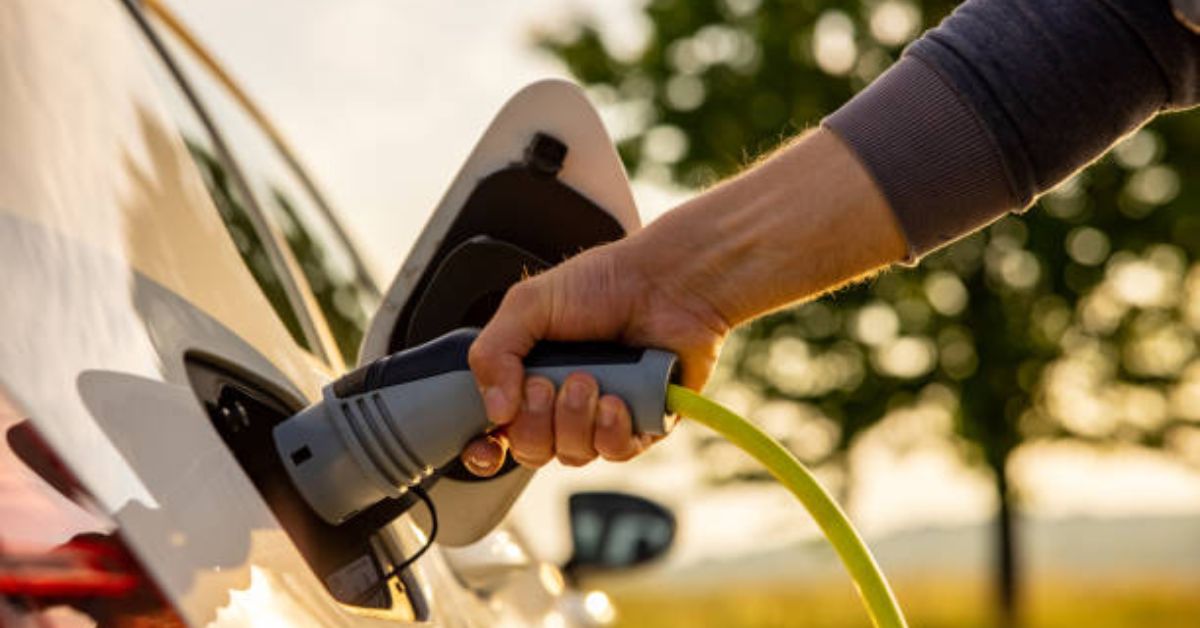
Photo Credit: Deposit Photos

Calamvale does not sit at the same socioeconomic level as those western suburbs, yet its raw EV numbers remain remarkably high. Associate Professor Gavin Northey from Griffith University has raised a theory for why this is happening.

“In suburbs like Calamvale and Sunnybank Hills, for example, nearly a third of all residents share some Chinese ancestry,” he said. “In these suburbs, there may be some form of ‘country-of-origin’ effect, where it’s really quite natural to have Chinese-manufactured EVs in their consideration set.”

Chinese EV brands, led by BYD, have become the dominant force at the lower and mid-range end of the Australian EV market. A purpose-built BYD vessel docked in Melbourne last month carrying 5,000 vehicles, a shipment described by one energy analyst as a turning point in Australian motoring. According to the Federal Chamber of Automotive Industries, almost one in seven cars sold across Australia in March was an EV.

Northey is careful to frame this as a plausible explanation rather than a confirmed cause. Multiple factors overlap in suburbs like Calamvale, including housing type, commuting patterns, and fuel cost sensitivity.

Forest Lake and the car dependent equation

Forest Lake sits to the west of Calamvale and shares many of its planning characteristics, operating as a residential hub built around the private car where local streets feed arterial roads and residents have limited rail access. This car dependency has historically been one of the strongest arguments in favour of EV uptake. If residents must drive regardless, the fuel savings from switching to electric become significant relatively quickly.

Macquarie University economics Associate Professor Rohan Best points to upfront cost as the primary remaining barrier.
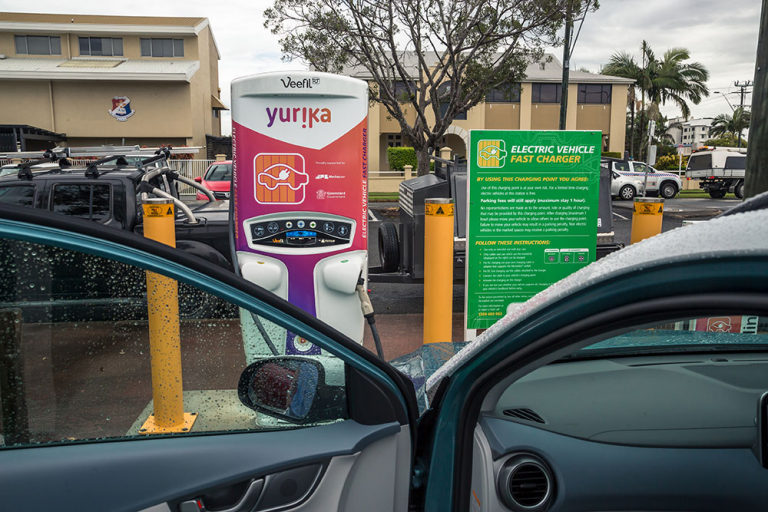
Photo Credit: RACQ

“The upfront cost is one of the primary barriers to whether people can afford it or not, it’s still quite high relative to petrol cars,” he said. “It does tend to be those of higher socioeconomic backgrounds who can afford it.”

That constraint is shifting. Salary sacrifice arrangements have made EVs accessible to a wider income range, and the arrival of BYD and other Chinese manufacturers at lower price points has widened the market well beyond early adopters.

Across most of Brisbane, standard hybrid vehicles still outnumber full EVs in most suburbs. Northey describes plug-in electric hybrids in particular as a transitional technology for households not yet ready to commit fully, offering lower fuel costs without the range anxiety and charging logistics that still deter some buyers.

For southern Brisbane residents in areas like Forest Lake and Calamvale where longer commutes are typical, the cost-per-kilometre advantage of a full EV over time remains one of the more compelling arguments in the category.


Published 18-June-2026

Richlands Tesla Superfan Clocks 417,000km in Rideshare Work

A Richlands Tesla superfan has reached 417,000 kilometres in his Model 3 while maintaining 88 per cent battery health, providing real-world evidence that electric vehicles can handle intensive commercial use.


Nathan Merritt operates his rideshare business from the Forest Lake and Richlands area, using his 2021 Tesla Model 3 for full-time Uber and private transfer services. The vehicle, nicknamed Mr Sparkle, has completed more than 38,000 trips since Merritt purchased it in late 2020 with help from a $20,000 loan from his grandfather.

The Tesla superfan also administers the Tesla Owners Australia Facebook group, which has grown to over 116,000 members. Through his rideshare work and online community involvement, he has introduced Tesla technology to tens of thousands of passengers across Brisbane’s south-west.

Breakdown Sparks Fundraising Response

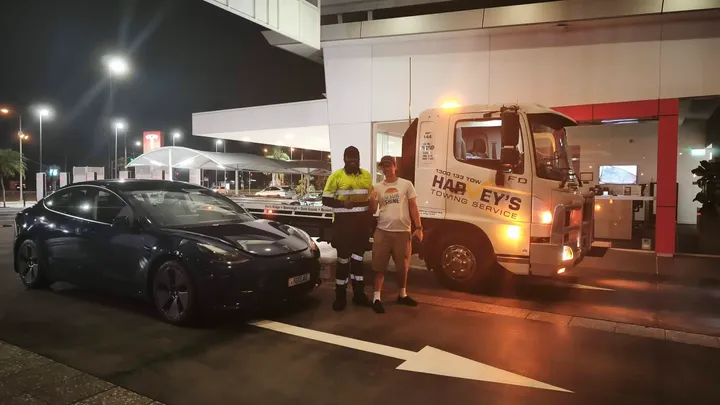
On January 30, while charging in Brisbane, Mr Sparkle suffered a sudden shutdown that locked Merritt out of the vehicle. Tesla Roadside Assistance replaced the low-voltage battery on site, but further diagnostics revealed high-voltage battery issues requiring the car to be towed to the Mount Gravatt service centre.

Photo Credit: Nathan Meritt / gofundme

Repair costs are expected to be under $1,000, significantly less than comparable repairs for a petrol vehicle with similar mileage. Following the breakdown, Merritt launched a GoFundMe campaign to help cover repair costs and lost income. As a sole trader, the unexpected breakdown meant immediate loss of his primary income source.

The campaign attracted both support and criticism within the Tesla community. Some questioned whether business repair expenses should be crowdfunded, while others argued the high mileage justified community support. As of early February, the campaign had raised approximately $1,427 toward an $1,800 goal.

Real-World Performance Data

Over more than four years of operation, the vehicle has required minimal maintenance, with early costs limited to a tyre rotation of about $50 and a new set of tyres before reaching 50,000 kilometres. The 88 per cent battery retention after 417,000 kilometres places Mr Sparkle among the highest-mileage Tesla Model 3 vehicles documented globally, with the car still achieving approximately 375 kilometres of range on a full charge.

Merritt has documented fuel savings of approximately $900 per month compared to operating a petrol vehicle for rideshare work. His Richlands home solar system and two Tesla Powerwall batteries enable him to charge predominantly from renewable energy, with electricity bills averaging around $72.50 per month including household consumption.

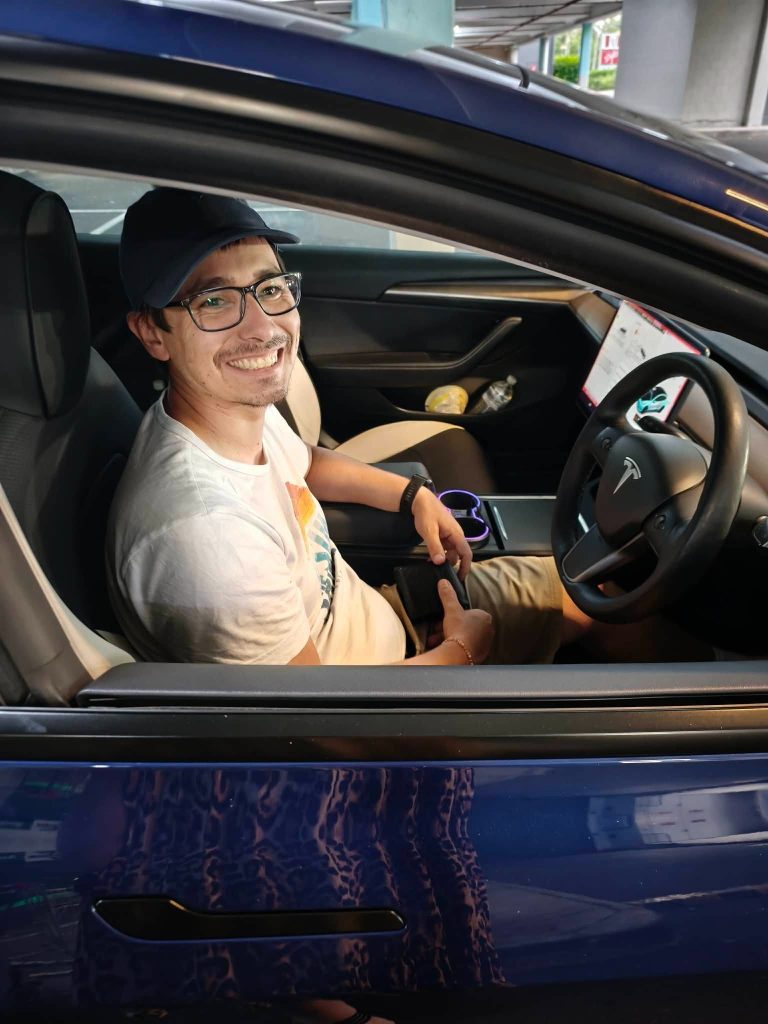
Tesla superfan Nathan Meritt
Photo Credit: Nathan Meritt / gofundme

The Tesla Model 3 Standard Range Plus uses Lithium Iron Phosphate battery chemistry, engineered for high cycle counts and durability. The 88 per cent capacity retention after an estimated 1,500 to 2,000 full charge cycles demonstrates the technology’s resilience under intensive commercial conditions.

What This Means for Local EV Adoption

Merritt’s operation demonstrates electric vehicle viability for commercial transport in Brisbane’s south-west corridor including Forest Lake, Richlands, Springfield and surrounding suburbs. The extensive road network connecting these areas to Brisbane CBD, airports and major employment centres suits electric vehicle range capabilities.

For Forest Lake and surrounding suburbs, where many residents own homes with suitable roof space for solar installation, the combination of electric vehicles and home renewable energy systems offers significant potential for household cost savings on both transport and energy.

High-mileage success stories like Mr Sparkle help address battery longevity concerns that remain barriers to electric vehicle adoption. For potential buyers in the area, real-world data from intensive commercial operations provides more relevant information than manufacturer claims.

Merritt has indicated intentions to continue operating Mr Sparkle well beyond 500,000 kilometres, potentially demonstrating whether electric vehicles can achieve the durability seen in commercial diesel applications.

Support the repair effort: Help get Mr.Sparkle Back on the road!


Published 07-February-2026.