
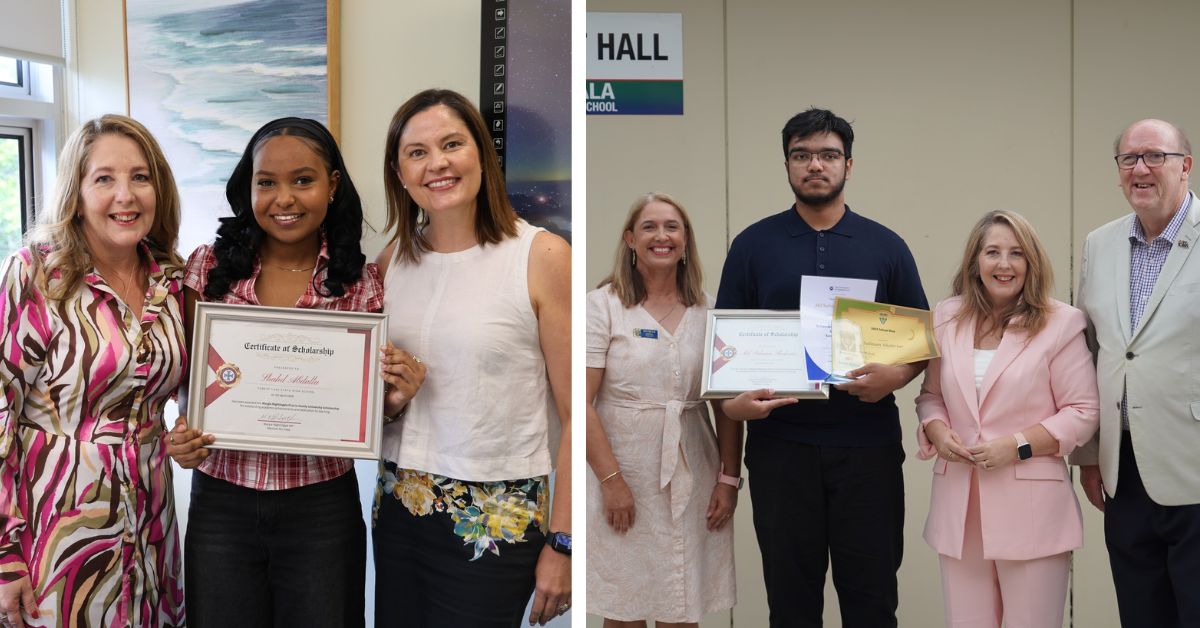
Two Local Students Are About to Become the First in Their Families to Go to University

Shahd from Forest Lake State High School and Salman from Glenala State High School have been named the 2026 recipients of the First-in-Family Bursary, a local initiative designed to help young people take the step into higher education when no one in their family has done it before them.


Both students will be the first in their families to attend university, a milestone that carries a particular kind of weight. There is no parent who has been through orientation week, no sibling who can explain how HECS works, no family shorthand for navigating the early months of a university degree.

The bursary exists precisely for students in that position, covering the upfront costs that can derail a capable student before they even begin: textbooks, technology, equipment and other essentials.

For Shahd and Salman, the recognition is a signal that the talent and determination they have brought to their studies at Forest Lake State High School and Glenala State High School respectively has not gone unnoticed in their own community.

Two Schools, Two Suburbs, One Step That Changes Everything

Forest Lake State High School has served the western suburbs of Brisbane since 2001, building a reputation across academic and sporting programmes for over 1,600 students in Years 7 to 12. The school draws from a broad and diverse community, and Shahd’s selection reflects the kind of academic drive the school works to cultivate.
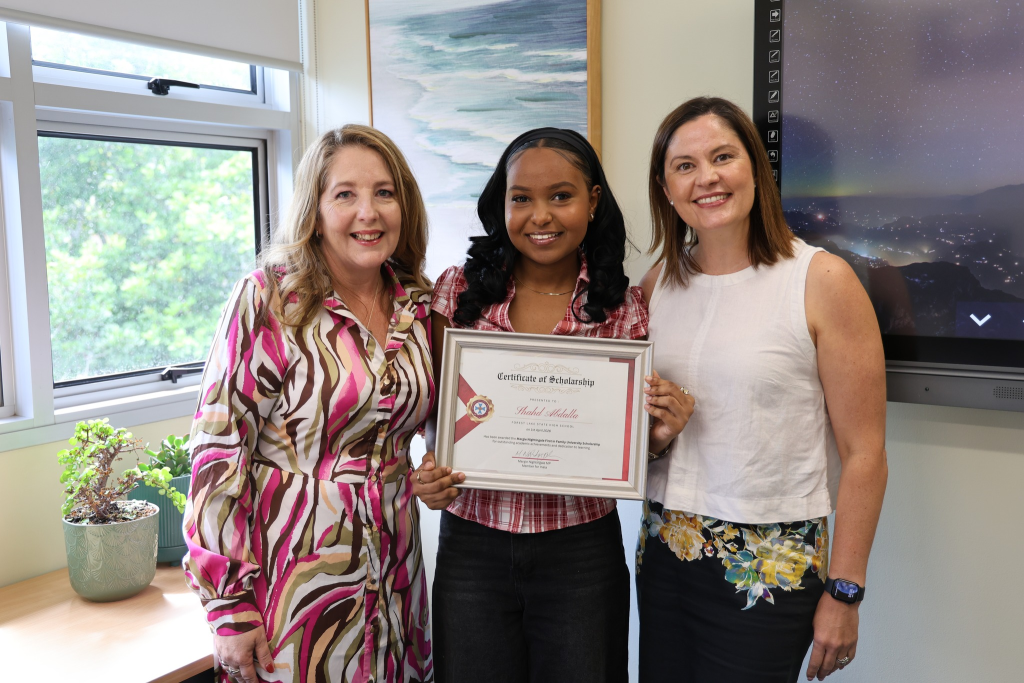
Glenala State High School in Durack has been a cornerstone of the Inala and Forest Lake area since 1996, formed from the amalgamation of Inala State High School and Richlands State High School. Its motto, “Believe and Achieve,” and its four core values of respect and responsibility, commitment to learning, pride and perseverance frame a school that serves some of Brisbane’s most culturally diverse communities. Salman’s path to university through Glenala is the kind of story that school motto was written for.
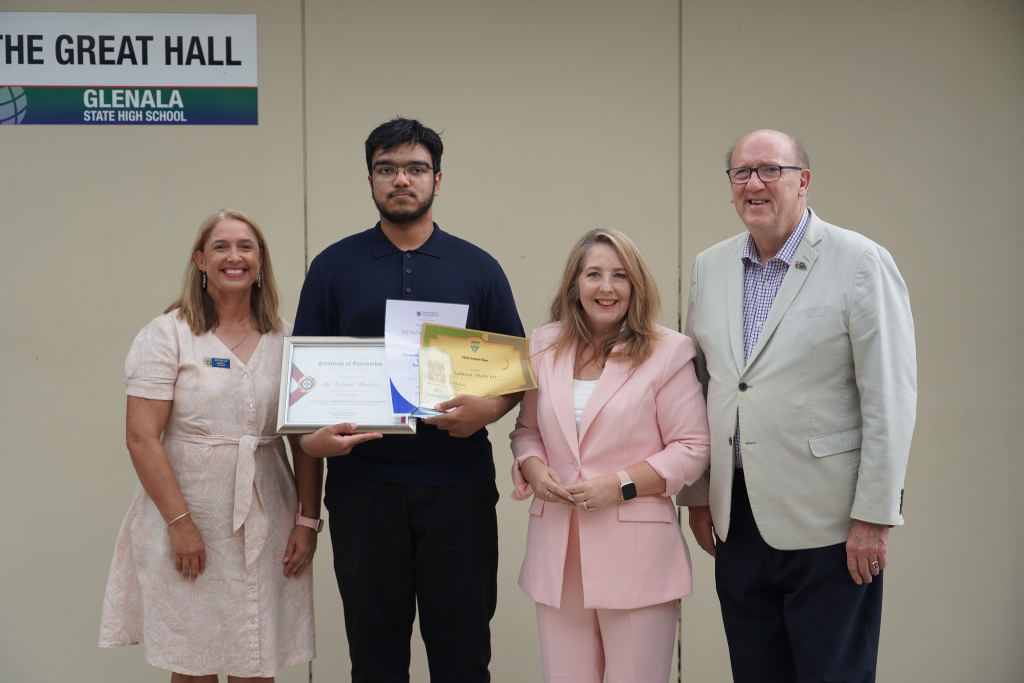
Both schools sit within the same community, a south-western Brisbane corridor where families from many different cultural and linguistic backgrounds have built their lives, and where being the first in a family to attend university is not unusual. It is, in many of these households, a quiet aspiration held for years before someone finally makes it real.

Helping Students Get Started

The bursary targets that gap directly, providing recipients with a one-off payment to establish a financial foundation. By covering these initial costs, the initiative ensures students focus on their studies rather than their bank balances from day one. The intent is not just to support the two individuals receiving it but to open a pathway for the generations that follow.
Photo Credit: First in Family

This practical support addresses a significant hurdle. Textbooks, a laptop, software licences, transport costs and enrolment fees can add up to hundreds or even thousands of dollars in the first weeks of semester. For a student without family experience in higher education, there is often no roadmap for managing those early expenses.

“Being the first in a family to attend university can be daunting, but with the right support and encouragement, it can also be life-changing,” the bursary announcement noted.

A Community Initiative from a Local Who Knows the Path

The First-in-Family Bursary is a personal initiative of Ms Margie Nightingale, the local member for the Inala electorate, which covers Forest Lake and the surrounding suburbs. Ms Nightingale has deep roots in the area, having grown up in Inala, attended local schools and raised her family in the community. She was herself the first in her family to attend university, a connection to this bursary that goes beyond policy.

The bursary reflects a view of community that is anchored in long-term investment: that supporting one student through a financial barrier at the right moment can ripple forward through families and communities for decades. Both Shahd and Salman represent, in Ms Nightingale’s words, “the talent, determination and potential that exists right in our electorate.”

Forest Lake State High School can be contacted at admin@forestlakeshs.eq.edu.au. Glenala State High School can be reached at admin@glenalashs.eq.edu.au.


Published 25-April-2026
Have Your Say, Forest Lake: More Homes, Sooner Consultation Opens

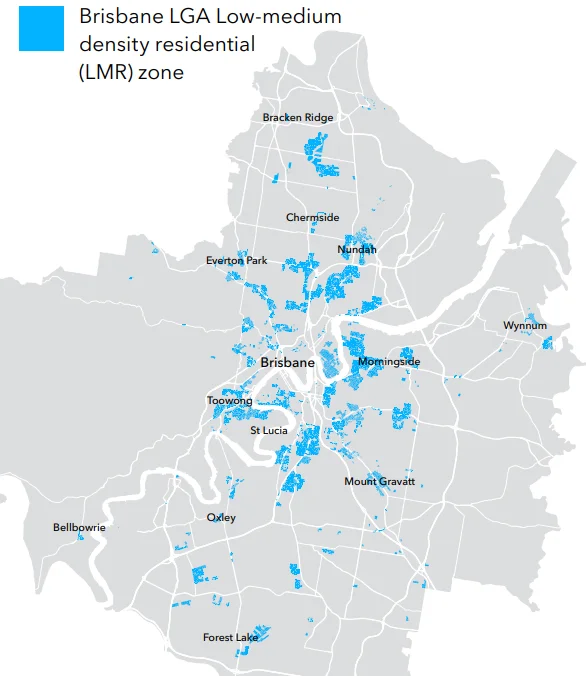
Forest Lake is one of 18 Brisbane suburbs where planning rules for low-medium density residential zones may change under the More Homes, Sooner initiative, but local residents are making clear that their support for new housing hinges on whether schools, roads and public transport can keep pace with any growth the changes deliver.


The proposed changes to the LMR zone affect pockets of Forest Lake close to public transport stops and the Forest Lake Shopping Centre on Forest Lake Boulevard. Community consultation is open until Friday 20 March 2026. Forest Lake residents have delivered a pointed and practical response, cutting through abstract planning language to ask a question local families face every day: what comes first, the homes or the infrastructure to support them?

A Suburb Already Under Pressure

Developers master-planned Forest Lake from the ground up in 1991 as Brisbane’s first purpose-designed community, creating 7,700 house lots, 120 hectares of parks and the 10.9-hectare recreational lake that defines the suburb’s identity. That deliberate design gave Forest Lake its community character, but it also created fixed infrastructure and a fixed school catchment that is now under genuine strain.

Forest Lake State High School introduced an Enrolment Management Plan in August 2025, meaning the school is operating at or near capacity and is now restricting out-of-catchment enrolments. Families already living in Forest Lake say the suburb’s secondary schooling infrastructure cannot currently absorb significant additional enrolments. Community members have raised this directly in response to the More Homes, Sooner proposals, with the concern that more dwellings means more families, and more families means more pressure on schools that are already full.

The transport picture adds to that concern. Forest Lake has no train station within its boundaries. The suburb’s main public transport connections to the city are the Route 100 CityXpress from Forest Lake Shops to the city, and the Routes 460 and 461 via the Centenary Highway and Western Freeway. For the More Homes, Sooner framework to designate areas near bus stops as Key Locations eligible for four-storey development, the frequency and reliability of those services matters enormously to residents who would rely on them.

What Is Being Proposed

The changes focus on Low Medium Density Residential LMR zones, typically located near transport corridors and shopping centres rather than across entire suburbs. The proposal would lift the base building height to three storeys across all LMR land. Properties within 400 metres walking distance of a shopping centre or a bus stop with services at least every 20 minutes during the day would qualify as Key Locations and could rise to four storeys on lots of 800 square metres or more.

More Homes, Sooner initiative
Photo Credit: BCC

In Forest Lake, only areas close to high-frequency routes would meet that threshold, while streets served by lower-frequency services would remain subject to the three-storey limit.

Minimum lot sizes would reduce to 120 square metres in some circumstances, enabling small freehold houses and terrace-style homes on compact blocks in well-serviced locations. The proposal would adjust on-site car parking requirements, reducing the requirement for two-bedroom units from two spaces to 1.5 spaces citywide and to 1.2 spaces in Key Locations, reflecting declining car ownership and the significant cost car spaces add to new homes.

Design safeguards are part of the framework, including minimum setbacks from freestanding houses, maximum building footprints and requirements for street tree planting.

Affordability: The Real Question

Beyond the infrastructure debate, Forest Lake residents have raised a point that goes to the heart of why the housing crisis persists regardless of what planning rules say. More dwellings do not automatically mean affordable dwellings. Builders and developers face rising costs for labour, materials and financing, along with the tax embedded in every new build, which pushes the price of new townhouses and compact apartments in established suburban Brisbane beyond the reach of many buyers on typical incomes.

Community members have noted that easing planning controls is only one part of the equation, and that without addressing the underlying cost of construction and the viability gap that affects smaller infill projects, the number of homes actually built as a result of these changes may be far fewer than the headline figures suggest. That concern has some grounding in recent history: new dwelling approvals across Brisbane’s LMR zones fell from around 1,100 homes per year to just 445 in 2023, not because the planning rules prevented development, but because the economics of building did not stack up.

Planning-aware residents view the initiative’s adjustment of car parking requirements as one of the more practical levers, noting that a single basement car space can add up to $82,000 to the cost of a unit. Whether that alone is enough to shift the economics meaningfully is a genuine question the community is raising through this consultation.

How to Have Your Say

Consultation on the More Homes, Sooner draft amendments is open until Friday 20 March 2026. Residents can share feedback online at brisbane.qld.gov.au by searching “More Homes, Sooner”, by emailing strategicplanninghousing@brisbane.qld.gov.au, or by calling 07 3403 8888. Written submissions can be posted to Strategic Planning (More Homes Sooner), Brisbane City Council, GPO Box 1434, Brisbane QLD 4001.

Photo Credit: BCC


Published 26-February-2026.

Forest Lake State High Selected To Get Dignity Vending Machine

charity to provide 120 schools across Queensland with a Dignity Vending Machine (DVM).

In addition to free sanitary products, all Queensland schools will have access to the Period Talk education program, which is designed to educate students in Year 5 to Year 8 about menstruation and the impact of periods.

Education Minister Grace Grace said access to sanitary products and misplaced stigma around periods should never be barriers to learning.

“We want all students to be confident to attend school every day. Giving students access to free sanitary products can make a real difference, especially for students whose families are doing it tough, have unstable accommodation or are fleeing domestic and family violence,” said Ms Grace.


Share the Dignity is a women’s charity in Australia, that works to make a real difference in the lives of those experiencing homelessness, fleeing domestic violence, or doing it tough.

They distribute period products to women, girls, and anyone who menstruates who needs support. Through collection drives and campaigns, they get to collect hundreds of thousands of period products each year, which they also distribute directly to charities across Australia.

share the dignity
Photo credit: Share the Dignity/Facebook

So far, they have installed around 282 DVMS across Australia, providing free period packs containing two pads and six tampons, to those who need them most.

Ms Grace said they received so much interest from schools, with over 200 applying for the machine. However, the schools were selected based on identification of a suitable location in their school for the DVM, and their level of need to supply free sanitary products to students.

“From that we have selected 62: 53 state, 5 Catholic, and 4 Independent schools,” Ms Grace said.

“For those schools that missed out this time around, or didn’t get an EOI in, there will be another opportunity to apply for a further 58 machines later this year,” she said.

An additional 58 schools will be selected for the DVM on the second expressions of interest process in the second semester of 2022.

Inala Art Gallery Presents ‘Collections 2020’ from Year 11 and 12 Students

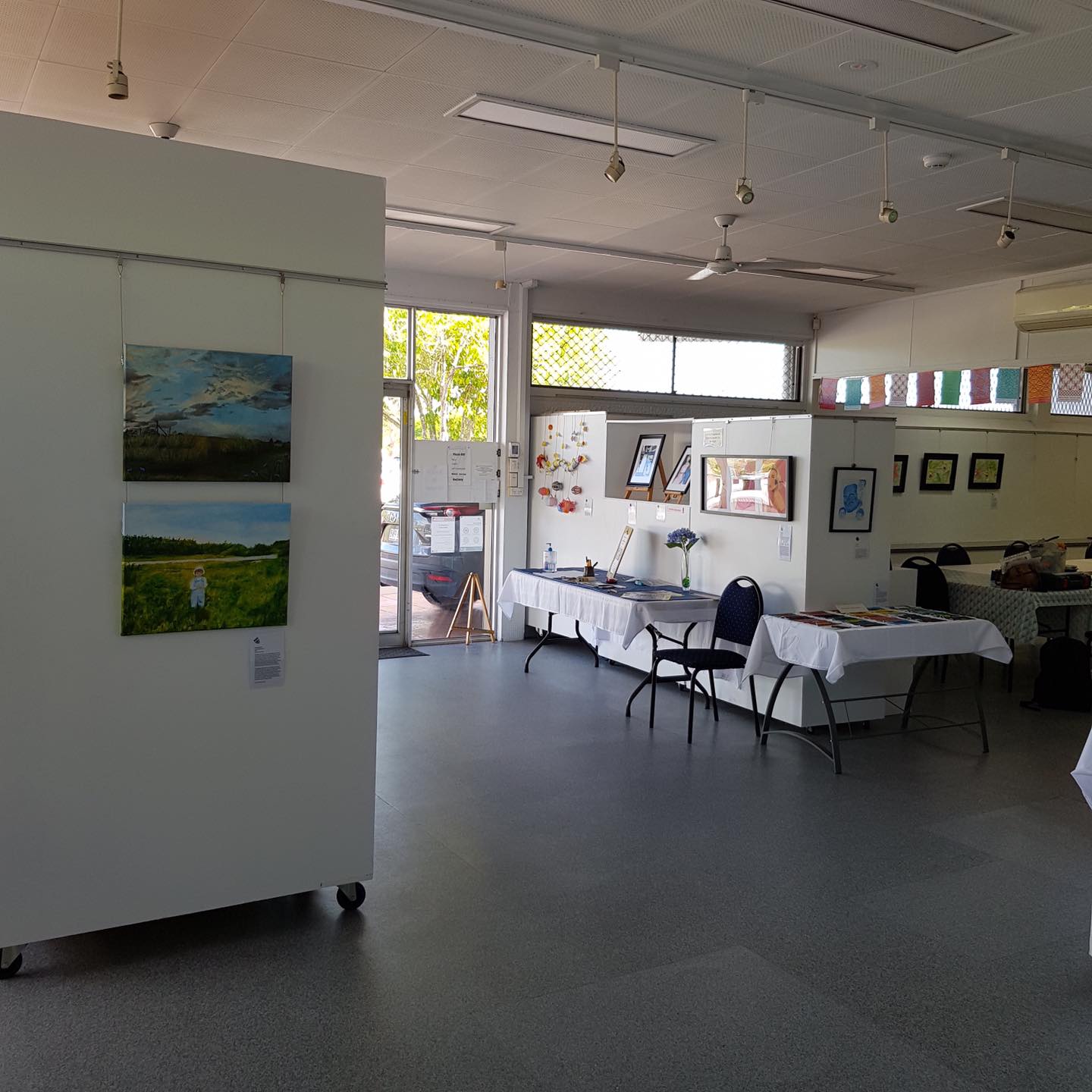
Year 11 and Year 12 students from the Forest Lake State High School and the Glenala State High School have come together to collaborate on an art showcase at the Inala Art Gallery. 

For the second year in a row, the students are presenting their 2D, 3D and other media works in “Collections 2020.” They used their creative talents to express and reflect on this challenging year.


The students hope that this will be an annual collaboration to strengthen and grow the local community’s creative industry. 

Photo Credit: Forest Lake High School

Collections 2020 opened on 27 Nov 2020 but the affair didn’t have an official opening ceremony due to the pandemic. However, for anyone interested in discovering emerging talents and sharing in the success of these students, the free exhibit will run until 30 Jan 2021.  

Inala Art Gallery is open every Tuesday to Saturday from 10:00 a.m. to 3:00 p.m. The staff will take a holiday break from 17 Dec 2020 to 12 Jan 2021. Phone (07) 33728208 before your visit. 


Members of the gallery recently elected a new committee following its soft re-opening post-COVID in June. 

“The first thing to be faced was to make the Gallery an attractive workspace which has appeal to exhibitors, visitors, classes and the community generally. With these goals largely achieved, now it is time not only to maintain what has been gained but to look ahead to the next stages in making Inala Art Gallery the place to be in 2020/2021,” Rowena Solomon, the new president said.